Capital & Investing
Capital Is Everywhere. Access Is Everything.
Why finding capital is as much about understanding people, relationships and investment motivations as it is about the opportunity itself.
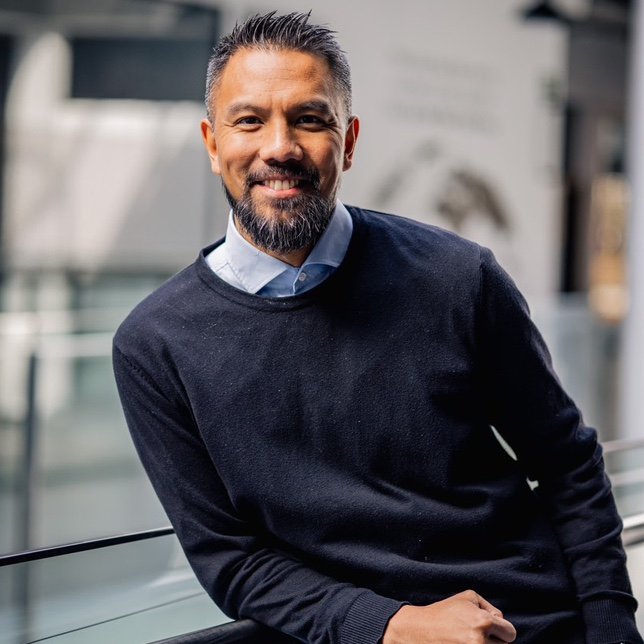
Written by Daniel Antonsson · · 6 min read

I was nineteen when I acquired my first business. I had approximately ten per cent of the capital required to complete the acquisition.
The remaining capital had to come from somewhere.
Ultimately, I financed the acquisition through a combination of my own money, a bank, corporate financing and a private lender who understood the industry and believed in both the business and me.
I could have looked at the amount of money I had and concluded that buying the business was beyond my reach. Instead, I started with what I wanted to achieve and worked backwards.
That way of thinking has stayed with me throughout my professional life.
I've always had a natural ability to find capital, sometimes in circumstances where the available options appeared remarkably limited. Over the years, I've come to realise that much of this ability comes from how I approach the problem in the first place.
Finding capital is one of the most creative disciplines in business.
Start with the end in mind
When people need capital, they often begin by deciding how they are going to raise it.
They determine how much equity they are willing to sell, prepare a presentation and start looking for investors. Or they approach a bank and hope the business meets its lending criteria.
In doing so, they may have already limited their options considerably.
I prefer to begin with the desired outcome.
What are we actually trying to achieve? What needs to happen for us to get there? Which elements of the transaction are essential, and which can be structured differently?
Once you understand the destination, you can start exploring every conceivable route towards it.
The solution might involve equity, debt, strategic partnerships, deferred payments or a combination of several different financing sources. It might involve restructuring the transaction itself.
Sometimes the most interesting solution is one that nobody had considered when the process began.
The ability to remain flexible about the route while staying focused on the destination is something I consider fundamental to capital raising.
Every conversation can change the deal
One of the most valuable things you can do when exploring a business opportunity is to speak with people who have relevant experience.
An experienced investor might see a way to structure the transaction differently. A business owner might identify a potential strategic partner. Someone with a background in banking might suggest a financing solution you hadn't considered.
Each conversation introduces another perspective.
This is one of the reasons I've always enjoyed meeting people from different professional backgrounds. I want to understand how they think, what they have experienced and how they approach opportunities.
During the five years I spent building a business within investment intelligence, I worked closely with venture capital firms, private equity investors, investment banks, family offices and commercial banks. My professional relationships extended from Singapore to New York.
What makes such a network valuable goes far beyond knowing people who have access to money.
It is the collective experience, knowledge and creativity of those relationships.
A single conversation can fundamentally change the way you approach a transaction. It can reveal a financing source, introduce a new participant or uncover a way of creating value that wasn't visible before.
The more perspectives you have access to, the more possibilities you are able to explore.
Create an offer worth investing in
Whenever I consider approaching someone with a business opportunity, I start by asking myself what is in it for them.
It sounds obvious, yet I think many capital raising processes devote far too little attention to this question.
Entrepreneurs naturally focus on their own ambitions, their product, their growth plans and the capital they need. Fund managers focus on their investment strategy, their track record and the size of the fund they want to raise.
The capital provider has a different set of considerations.
They have their own ambitions, constraints, investment preferences and alternatives. They need a compelling reason to allocate capital to this opportunity rather than another.
This is where creative deal structuring becomes particularly interesting.
How can we make the potential upside more attractive? How can we address the downside? Are there ways to structure the transaction that better align the interests of everyone involved?
A good opportunity can become considerably more attractive when the terms are thoughtfully designed.
I believe that creating a genuinely compelling offer deserves at least as much attention as finding the people to present it to.
The objective is to create something that the right investor finds genuinely difficult to turn down.
Make the opportunity matter now
There is another dimension to an attractive investment opportunity that is often overlooked: the cost of missing it.
An investor can recognise the merits of an opportunity and still decide to wait.
There will always be another meeting, another investment committee discussion or another reason to postpone a decision.
Genuine scarcity can change that dynamic.
Perhaps there is limited room for participation. Perhaps a particular market opportunity exists within a defined window of time. Perhaps the transaction offers access to something that would otherwise be difficult to obtain.
When the opportunity is sufficiently attractive and genuinely limited, the decision to do nothing becomes a decision in itself.
The investor begins to consider what they might miss by not participating.
Of course, scarcity has to be real. Artificial deadlines and manufactured competition may create short-term pressure, but they can also destroy the trust on which valuable business relationships depend.
I would rather create an opportunity that generates its own sense of urgency.
The power of a calm approach
I've always believed that the way you present an opportunity is almost as important as the opportunity itself.
My natural approach to business conversations and negotiations is calm.
I want the person sitting across from me to feel comfortable asking questions, expressing concerns and exploring alternatives. I want them to feel that they are dealing with someone who understands the opportunity and has considered the possible outcomes.
I see little value in trying to transfer the pressure of a capital raising process to a potential investor.
If the opportunity is attractive, the terms are well structured and there is a genuine reason to act, much of the urgency already exists within the deal itself.
There is no need for the person presenting it to become the source of that pressure.
Confidence comes through in how you communicate, how you respond to difficult questions and how comfortable you are allowing someone to reach their own conclusions.
I believe this combination of a compelling opportunity and a calm, trustworthy approach is particularly powerful.
Access to capital is a creative capability
When I look back at the businesses I've built, the capital I've raised and the opportunities I've pursued, I rarely find that the final solution was identical to the one I initially imagined.
The process itself changes the possibilities.
Conversations introduce new ideas. Different people bring different capabilities. Creative structuring can make an opportunity attractive to participants who might otherwise never have considered it.
That is why I see access to capital as something much broader than a network of investors.
It is the ability to start with a clear objective, explore unconventional possibilities, understand what motivates other people and bring together the elements required to complete a transaction.
None of this guarantees that capital will be raised. Some opportunities will never be commercially viable, regardless of how creatively they are structured.
But I believe there are often far more possibilities than people initially realise.
Capital is everywhere.
The real skill lies in creating an opportunity that gives it a compelling reason to move.